
Filipinos and the Celebration of the Paschal Mystery: A Critical Commentary
The Paschal Mystery is the heart of Christian faith: the passion, death, resurrection, and glorification of Jesus Christ. In Catholic theology, it is not merely an event remembered once a year but the central mystery made present in the Church’s liturgy and sacramental life. The Catechism states that the Church celebrates above all the Paschal Mystery in the liturgy so that the faithful may live from it and bear witness to it in the world. At the same time, the Church also recognizes the value of popular piety, provided it is purified and illuminated by the liturgy rather than detached from it.
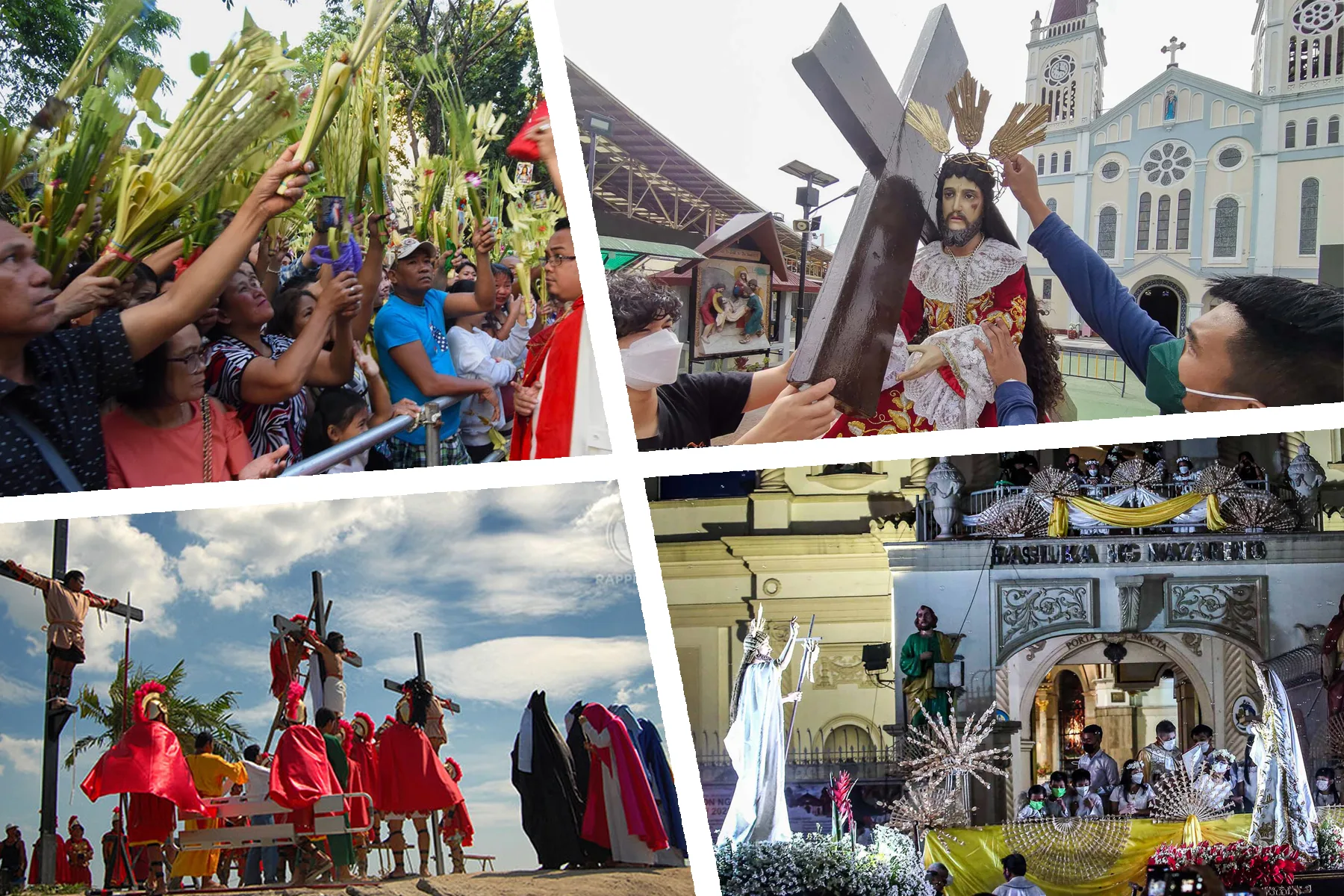
In the Philippines, the Paschal Mystery is celebrated with unusual intensity, depth, and public visibility. Holy Week is not only a church season but a national atmosphere. The country’s Catholic majority gives the commemoration of Christ’s suffering, death, and resurrection a scale that is communal, affective, embodied, and highly cultural. Processions, pabása, Visita Iglesia, senákulo, penitensya, the Siete Palabras, the veneration of the cross, and the Easter Salubong all show that for many Filipinos, the Paschal Mystery is not experienced as an abstract doctrine but as something dramatic, familial, and socially shared.
One of the great strengths of the Filipino celebration of the Paschal Mystery is that it resists reducing Christianity to mere intellectual assent. Filipino religiosity is concrete. It touches the senses, the body, memory, space, music, tears, procession routes, and family traditions. The mystery of Christ is encountered through images, chanting, barefoot walking, candlelight, and communal prayer. This gives Filipino Christianity a sacramental instinct: grace is perceived not as an invisible idea only, but as mediated through signs, gestures, and inherited rituals. In this sense, Filipino popular piety often preserves an incarnational imagination that more secularized societies have partly lost.
This is why Filipino Holy Week can be spiritually powerful. It forms memory across generations. Children do not simply learn that Christ died and rose; they grow up seeing elders prepare carrozas, hearing pabása in the neighborhood, accompanying family to churches, and waking before dawn for Salubong. The Paschal Mystery is thus inserted into domestic and communal life. It becomes part of the moral and emotional grammar of the people. Such continuity matters because faith survives not only through catechisms and classrooms but also through repeated public acts of remembrance.
Yet this same strength also reveals a major theological weakness. In many Filipino contexts, the Paschal Mystery is celebrated with far greater emphasis on passion and suffering than on resurrection and transformed discipleship. Good Friday often eclipses Easter Sunday in emotional force, preparation, attendance, and imagination. The suffering Christ is vividly loved; the risen Christ is comparatively underdeveloped in the spirituality of many communities. This imbalance can unintentionally narrow Christianity into a religion of endurance, sorrow, and guilt, rather than a full participation in death and new life.
This imbalance is visible in the prominence of penitential practices. Self-flagellation, crawling, reenacted crucifixions, and other extreme bodily acts have become internationally associated with Philippine Holy Week, even though Church authorities do not present such acts as the normative center of the Triduum. Public health officials have repeatedly warned against dangerous penitential practices, and ecclesial voices regularly urge the faithful to center prayer, conversion, and liturgical participation rather than spectacle or physical extremity. This is a crucial point: not every dramatic act of suffering is automatically a deeper participation in the Cross of Christ.
A critical theological question must therefore be asked: when Filipinos dramatize Christ’s suffering, are they entering the Paschal Mystery, or are they sometimes substituting physical display for inner conversion? The answer is mixed. For some devotees, panata is sincere, disciplined, and bound to gratitude, repentance, or petition. It is an embodied language of devotion. But for others, the performative aspect can overshadow the evangelical aim. A rite can remain emotionally moving while becoming spiritually shallow if it is disconnected from charity, justice, sacramental life, and moral transformation. The Church’s own teaching on popular piety insists precisely on this need for purification and proper ordering toward the liturgy.
Another critical point is that Filipino celebration of the Paschal Mystery often reveals the tension between liturgy and paraliturgy. Popular devotions are not bad; in fact, they can be precious vehicles of faith. But problems arise when processions, dramatizations, and inherited customs become more central in practice than the liturgical celebration of the Triduum itself. The Mass of the Lord’s Supper, the Good Friday liturgy, and especially the Easter Vigil are the Church’s highest ritual participation in the Paschal Mystery. When these are overshadowed by what is more visible, emotional, or culturally prestigious, the hierarchy of Christian worship becomes distorted.
The issue is not whether Filipino devotions should exist, but whether they remain anchored in the liturgy. Theologically, the Paschal Mystery is not simply remembered through folk custom; it is sacramentally enacted by the Church. A procession may prepare the heart, and a pabása may nurture reflection, but neither replaces the liturgical center. A mature Filipino Catholic spirituality should therefore not oppose popular religion and liturgy, but integrate them properly: devotions should lead into the Eucharist, the proclamation of the Word, repentance, baptismal renewal, and Easter mission.
There is also a social and anthropological dimension that deserves attention. Filipino observance of the Paschal Mystery is intensely communal. Holy Week becomes a shared moral time in which ordinary work slows, families gather, roads empty, media programming changes, and communities enter a different rhythm. This is significant. It means the Paschal Mystery still has public power in the Philippines. It has not yet been fully privatized. In a modern world where religion is often reduced to personal preference, Filipino Holy Week remains a collective witness that Christian memory can still shape public culture.
But this public power also creates ambiguities. Holy Week in the Philippines is at once sacred season, family reunion, tourist period, performance space, and cultural festival. As a result, the Paschal Mystery can sometimes be absorbed into heritage display or seasonal routine. One can join processions, post religious images, travel home, avoid meat, and even speak of sacrifice, while remaining untouched by the radical ethical demands of Christ’s death and resurrection. The danger here is cultural Catholicism without deep conversion: fidelity to forms without surrender to the Gospel. Even church leaders have recently reminded families not to reduce Holy Week to reunion alone, but to shared prayer and recollection.
A further critical commentary concerns how the Filipino imagination often identifies the Paschal Mystery strongly with personal suffering but less with structural sin and social transformation. Many devotees understand Christ’s passion through the lens of poverty, family pain, illness, sacrifice, and patient endurance. That identification is pastorally meaningful because Christ indeed meets people in suffering. Yet if the Cross is interpreted only as a call to bear pain silently, then the Paschal Mystery risks being depoliticized. The death and resurrection of Christ also judge injustice, expose oppressive powers, and inaugurate a new humanity. The risen Christ is not only consolation for victims but also a summons to discipleship, reconciliation, justice, and hope-filled action.
In this respect, Filipino Holy Week is strongest when it connects compassion for the suffering Christ with compassion for suffering people. The deepest participation in the Paschal Mystery is not simply to watch Christ suffer, nor even only to grieve with Mary, but to let one’s life be conformed to Christ in love. Care for the poor, forgiveness, honesty in public life, solidarity with the abandoned, and concrete acts of mercy are not secondary to the Triduum; they are among its proper fruits. A Holy Week that ends in unchanged social habits has remembered the story but not fully entered the mystery.
The Easter Salubong offers an important correction here. It dramatizes encounter, reunion, joy, and the lifting of sorrow. It reminds the Filipino faithful that Christianity does not culminate in funeral sadness but in resurrection. Yet even here, a critical observation is necessary: the emotional beauty of Salubong should not obscure the theological magnitude of Easter. Easter is not merely the happy ending after a tragic week. It is the decisive victory of God over sin and death, the foundation of Christian hope, and the beginning of the Church’s new life. When Easter becomes liturgically or culturally less intense than Good Friday, the whole Paschal Mystery is spiritually shortened.
There is likewise a fruitful insight in the Filipino notion of panata. A vow or devotional commitment expresses perseverance, gratitude, and relational faith. It shows that religion is not always spontaneous emotion but sustained obligation of love. That is admirable. Still, panata can become problematic when the act itself is treated almost mechanically, as though fulfilling the vow automatically secures blessing. Then devotion risks sliding into ritual transaction. Christian theology demands something deeper: faith, grace, conversion, and a relationship with God that cannot be reduced to exchange logic.
So, how should one finally assess the Filipino celebration of the Paschal Mystery? It should be judged neither romantically nor dismissively. Romanticism would praise every custom uncritically as pure faith. Dismissiveness would sneer at popular devotion as backward or superficial. Both are errors. Filipino Holy Week practices contain genuine theological riches: embodiment, communal memory, reverence, tenderness toward Christ and Mary, endurance, and the capacity to sacralize public time. But they also contain real risks: emotional excess without catechesis, suffering without resurrection, spectacle without conversion, and devotion detached from sacramental and moral depth.
The proper pastoral task, therefore, is not to abolish Filipino Holy Week customs but to deepen them. The Church in the Philippines serves the Paschal Mystery best when it keeps what is spiritually fertile in popular religiosity while clearly centering the Triduum, the Eucharist, Scripture, baptismal renewal, catechesis, and works of mercy. Filipino culture has already shown that it knows how to mourn with Christ. The greater challenge is to rise with him: to celebrate Easter not only with dawn processions and festive music, but with renewed discipleship, social conscience, and Christian hope.
In the end, the Filipino way of celebrating the Paschal Mystery is profoundly revealing. It shows a people who do not treat religion as merely cerebral, who instinctively understand symbol, ritual, and shared suffering, and who still allow the story of Christ to interrupt national life. But it also shows a Church continually called to evangelize its own devotional culture. For the Paschal Mystery is not fully celebrated when Christ is pitied, imitated externally, or remembered sentimentally. It is fully celebrated when his passage from death to life becomes the pattern of the believer’s own conversion and the moral pattern of a people.