
Joy, Power, and the Child Christ: Rethinking the Feast of the Santo Niño of Cebu
The Child at the Center: Why the Santo Niño “Works” for the People
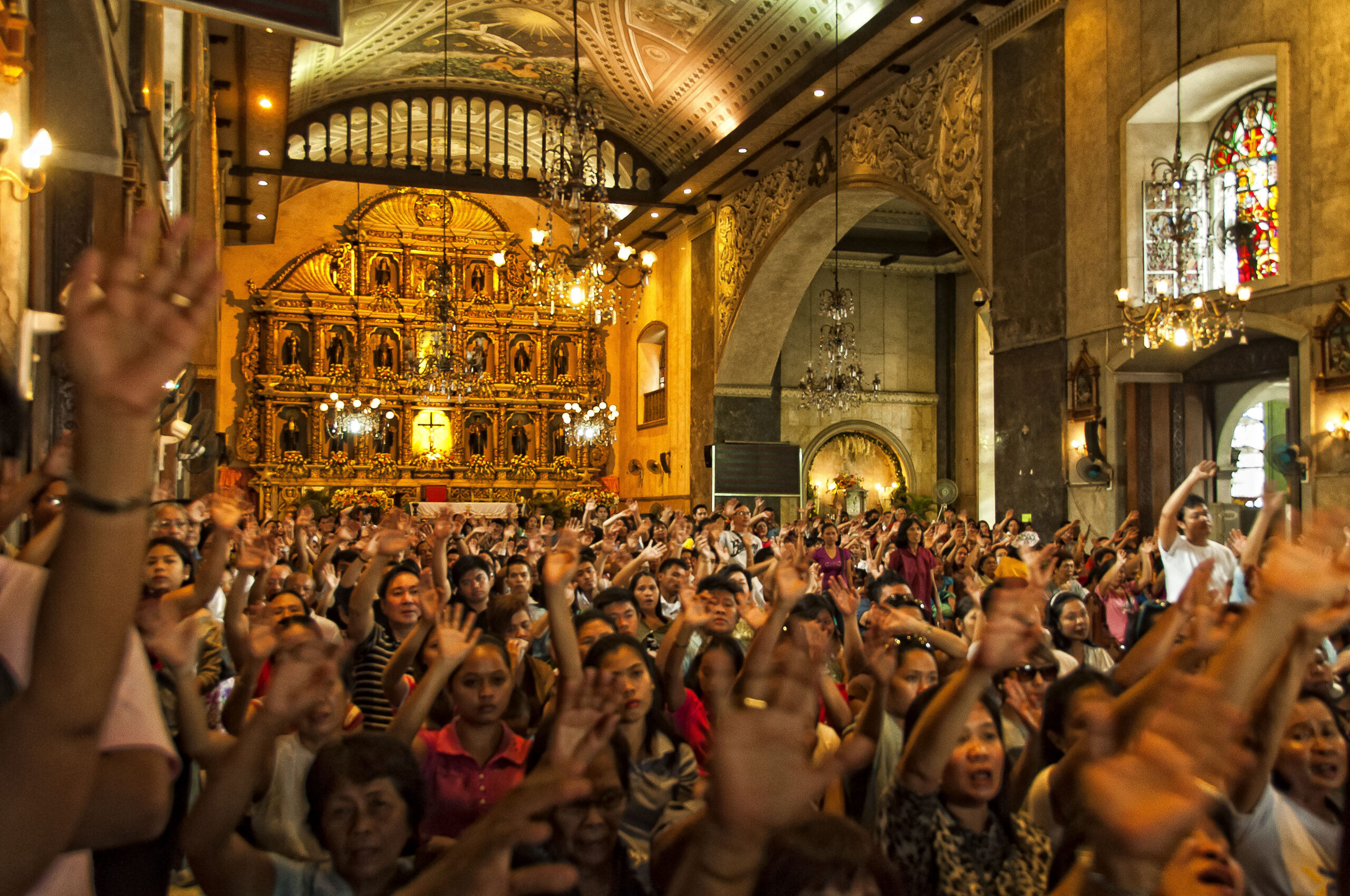
In Cebu every January, the devotion to the Señor Santo Niño gathers together liturgy, street ritual, family memory, and civic identity in a single religious season. The streets fill, the drums throb, devotees lift images of the Child Jesus, and the city becomes a moving altar. The Feast is not merely a cultural show; it is lived Catholicism in motion—an embodied theology, performed by the poor and the powerful alike, and negotiated in the friction between prayer and spectacle, trust and transaction, evangelization and marketing (Bautista, 2021; Toledo, 2021).
The Santo Niño devotion persists because it meets people where they are: in the household, in precarious work, in illness, in daily fear, and in the longing for protection. Scholarship on Philippine material religion notes that many devotees relate to sacred images not only as reminders of God but as agentive presences—figures believed to “act,” to protect, to intervene, and to accompany (Bautista, 2021). This is precisely why the Santo Niño becomes “close”: the Child Jesus is imagined as approachable, intimate, and emotionally safe—especially within Filipino family-centered religiosity (Bautista, 2021).
This does not automatically mean superstition; it can be the logic of a people whose faith is formed under vulnerability. Yet it does create a pastoral and theological risk: popular devotion can drift toward sentimentalism, magical expectations, or religious consumerism when the liturgical and scriptural grounding is thin and catechesis is weak (Toledo, 2021). The Church itself recognizes this tension: popular piety can be a genuine path into faith, but it needs formation so that devotion does not collapse into manipulation, merely cultural habit, or the reduction of God into a vendor of favors (Congregation for Divine Worship and the Discipline of the Sacraments, 2001; Toledo, 2021).
Sinulog as Devotion and as System
Sinulog is not only a prayer event; it is also a civic machine. The Feast includes novenas, Mass schedules, penitential walks, and devotional performances formally organized around the Basilica’s calendar (Basilica Minore del Santo Niño de Cebu, 2025a). At the same time, Sinulog operates as an engine of crowds, sponsorships, and public management — producing predictable pressures: congestion, waste, crowd control issues, commercialization, and the temptation to treat the religious core as branding (SunStar Cebu, 2025; Yamagishi & Ocampo, 2022).
Recent research on Sinulog’s event-management realities (even when focused on non-theological dimensions such as environmental governance) makes visible what theology must not ignore: the devotional event creates moral responsibilities. “Devotion” is not only prayer; it also becomes ethics—how one treats public space, workers, vendors, and the poor, and how leaders steward the festival’s meaning and impacts (Yamagishi & Ocampo, 2022). In fact, recent public appeals by Church leadership that urge cleanliness and moral responsibility explicitly frame these as expressions of “true devotion,” not optional add-ons (SunStar Cebu, 2026).
When Joy Becomes Escapism: The Ambiguity of Fiesta
The Feast is full of joy, and that joy is not trivial. Christian tradition permits celebration because the Incarnation itself is a proclamation that God is not ashamed of human life (Francis, 2013; Toledo, 2021). Yet fiesta also has a shadow side: joy can be used to anesthetize pain, to normalize inequality, and to turn suffering into something managed rather than confronted. The danger is not happiness; the danger is a joy that becomes escapist, where religion functions as cultural relief while the structures that produce poverty remain untouched.
Here liberation theology presses its question: Who benefits from the festival’s economics and politics, and who remains merely a body in the crowd? The Santo Niño is often invoked as protector of families and the poor—yet the poor can remain poor, and the festival’s energy can be harvested as civic prestige without translating into justice (Francis, 2020; Congregation for Divine Worship and the Discipline of the Sacraments, 2001). If the Feast celebrates a Child-King, then the real test of devotion is whether the Child’s “kingdom” is visible in social compassion and solidarity, not only in pageantry.
Sponsorship, Money, and Moral Boundaries
A particularly concrete contemporary fault line is sponsorship and moral coherence. Recent reporting notes the Cebu archbishop’s call for Sinulog organizers to reject gambling-related sponsorships because these contradict the religious meaning of the celebration and can intensify social harm among vulnerable families (CBCP News, 2026; GMA Regional TV, 2026). This intervention is significant because it shows that the Church is not only blessing the festival; it is also being asked—by its own logic—to guard the festival’s integrity against moral capture.
The question becomes sharper: if leaders can speak clearly about sponsorship ethics, can they also speak with equal force about labor injustice, exploitative local economies, political corruption, and the “slow violence” of poverty that shapes why many devotees cling to the Santo Niño as their last refuge (Francis, 2020; Francis, 2013)?
The Pastoral Problem: Formation Without Condemnation
It is too easy to mock popular devotion, and it is too easy to romanticize it. A serious pastoral approach refuses both. Scholarship attentive to Filipino devotion argues for catechesis and liturgical formation so that devotion remains Christ-centered, Trinitarian, and ecclesial—rather than collapsing into mere cultural performance or superstition (Toledo, 2021). The Vatican’s guidance likewise insists that popular piety must be purified and evangelized—without destroying it—so it can serve faith rather than replace it (Congregation for Divine Worship and the Discipline of the Sacraments, 2001).
This matters in Cebu precisely because Sinulog is so powerful: it forms religious instincts at the level of the body—through gesture, movement, music, and touch. And because it forms instincts, it can form either (a) resilient hope with ethical responsibility, or (b) transactional religiosity that confuses God with luck and confuses devotion with desperation (Bautista, 2021; Toledo, 2021).
A Liberation-Theology Question for Sinulog
A liberation-theology reading does not ask devotees to stop dancing. It asks whether the dance is allowed to become a language of justice. If the Santo Niño is truly Señor, then devotion cannot end at the candle, the costume, or the procession route. The Child Jesus, in Christian confession, grows into the crucified and risen Christ; therefore, a devotion that freezes him as only “childlike comfort” without adult discipleship risks spiritualizing the very realities the Gospel intends to transform (Toledo, 2021; Francis, 2013).
Sinulog, at its best, is a school of hope. But hope, theologically, is not passivity. Hope is the refusal to accept suffering as normal. It is the insistence that prayer should produce action, and that joy should produce solidarity—especially with those who are present every year in the crowd not as tourists, but as the economically wounded faithful (Francis, 2020; Francis, 2013).
The final question is therefore not whether Sinulog is “authentic” or “superstitious” in the abstract. The real question is this: Will the Church and society allow the Santo Niño devotion to remain a beautiful survival mechanism—or will they allow it to become a genuinely evangelizing force that confronts the conditions that make survival the main religious project of the poor? (CBCP News, 2026; Bautista, 2021).
Conclusion
The Feast of the Santo Niño of Cebu endures because it touches something profoundly human: the need for nearness, protection, and joy in a world marked by uncertainty. Its strength lies in its ability to sustain hope, foster communal identity, and affirm that God chooses to dwell within ordinary life. As a form of popular religiosity, it is neither naïve nor disposable; it is a living theology expressed through bodies, music, memory, and celebration.
Yet precisely because the devotion is powerful, it is also theologically demanding. Joy, when detached from ethical responsibility, risks becoming consolation without conversion. The Child Jesus, when held permanently at the level of comfort and blessing, can be subtly removed from the trajectory of the Gospel that leads toward justice, solidarity, and mission. The Incarnation does not end in infancy; it unfolds into teaching, confrontation, crucifixion, and resurrection. A devotion that pauses too long at the manger risks forgetting this movement.
The critical question, therefore, is not whether the Feast should be celebrated—it should—but how it is allowed to form faith. Will the Santo Niño remain primarily a source of personal favors and cultural pride, or will devotion mature into discipleship that engages social realities, names injustice, and translates joy into responsibility? This is not a question for devotees alone, but for Church leadership, catechesis, and pastoral imagination.
If the Feast of the Santo Niño is to remain theologically faithful and pastorally credible, it must be permitted to grow—just as the Child it venerates must be allowed to grow. Only then can joy become evangelical rather than escapist, celebration become formative rather than consumptive, and devotion become not only a refuge for survival, but a wellspring for transformation.
References
Basilica Minore del Santo Niño de Cebu. (2025a). Fiesta Señor 2025.
(Basilica Minore del Sto. Niño de Cebu)
Basilica Minore del Santo Niño de Cebu. (2025b). Fiesta Señor 2025 schedule.
(Basilica Minore del Sto. Niño de Cebu)
Bautista, J. (2021). On the personhood of sacred objects: Agency, materiality and popular devotion in the Roman Catholic Philippines. Religions, 12(7), 454. https://doi.org/10.3390/rel12070454
(MDPI)
CBCP News. (2026). Cebu archbishop urges Sinulog organizers to reject gambling sponsors.
(cbcpnews.net)
Congregation for Divine Worship and the Discipline of the Sacraments. (2001). Directory on popular piety and the liturgy: Principles and guidelines. Vatican.
(SunStar Publishing Inc.)
Francis. (2013). Evangelii gaudium (Apostolic exhortation on the proclamation of the Gospel in today’s world). Vatican.
(ijmrap.com)
Francis. (2020). Fratelli tutti (Encyclical letter on fraternity and social friendship). Vatican.
(dehoniani.org)
GMA Regional TV. (2026). Sinulog organizers urged to avoid partnerships with gambling firms.
(GMA Network)
Sabonsolin, J. C. M. (2022). See-Know-Log: The Sinulog Festival through the lenses of the Cebuano journalists. International Journal of Advanced Multidisciplinary Studies, 2(11), 128–138.
(ResearchGate)
SunStar Cebu. (2025). Large crowd causes delay in Sinulog Grand Parade 2025.
(SunStar Publishing Inc.)
SunStar Cebu. (2026). Archbishop Uy urges devotees to keep Cebu clean as act of devotion during Fiesta Señor, Sinulog.
(SunStar Publishing Inc.)
Toledo, J. P. (2021). Popular Filipino devotion to the Santo Niño vis-à-vis the Catholic liturgy and the theology of the Incarnation [Master’s thesis, Ateneo de Manila University]. Archīum.ATENEO.
(Archīum Ateneo)Yamagishi, K., & Ocampo, L. (2022). Evaluating the greening agenda of festivals: The case of Sinulog. Turyzm/Tourism, 32(1), 115–140. https://doi.org/10.18778/0867-5856.32.1.06
(ResearchGate)